Most drivers think brake maintenance simply means checking pads, fluid, or clutch wear, particularly when scheduling brake and clutch services. But what few realise is that your suspension plays a vital role in how well your brakes work. The suspension system doesn’t just smooth out your ride. It also ensures tyres stay firmly on the road, weight is evenly distributed, and braking is stable. When the suspension suffers from common faults, braking performance can be seriously compromised.
Why Suspension Matters for Braking
- A healthy suspension keeps your wheels firmly planted and ensures that the contact between tyres and road remains consistent, even when you brake hard.
- If suspension components like shock absorbers, struts, springs, control arms, or bushings are worn or damaged, your car may nose-dive, sway, or lose tyre grip when braking, increasing stopping distances and reducing stability.
- This means that even if your brakes and clutch are serviced, worn suspension can undermine safe stopping. That’s why, during a full car servicing visit, especially when carrying out brake and clutch work, it’s wise to include a suspension inspection.
Common Suspension Issues and Their Warning Signs
Here are some of the most frequent suspension problems, and the common signs to watch out for:
Worn or Leaking Shock Absorbers / Struts
Shock absorbers and struts manage the vertical motion of the springs, keeping the tyres in contact with the road. When they wear out, they lose damping ability, meaning the car may bounce excessively over bumps or feel unstable when braking.
Watch for: a bouncy or overly soft ride, a “trampoline-like” sensation over uneven roads, or a pronounced nose-dive when braking.
Uneven Tyre Wear or Misaligned Wheels
Suspension geometry (springs, control arms, bushings) affects wheel alignment and tyre contact. Worn suspension can throw off alignment, causing tyres to wear unevenly.
Watch for: tyres wearing faster on one side or inner/outer edges, or the car pulling to one side while driving or braking.
Sagging or Broken Springs
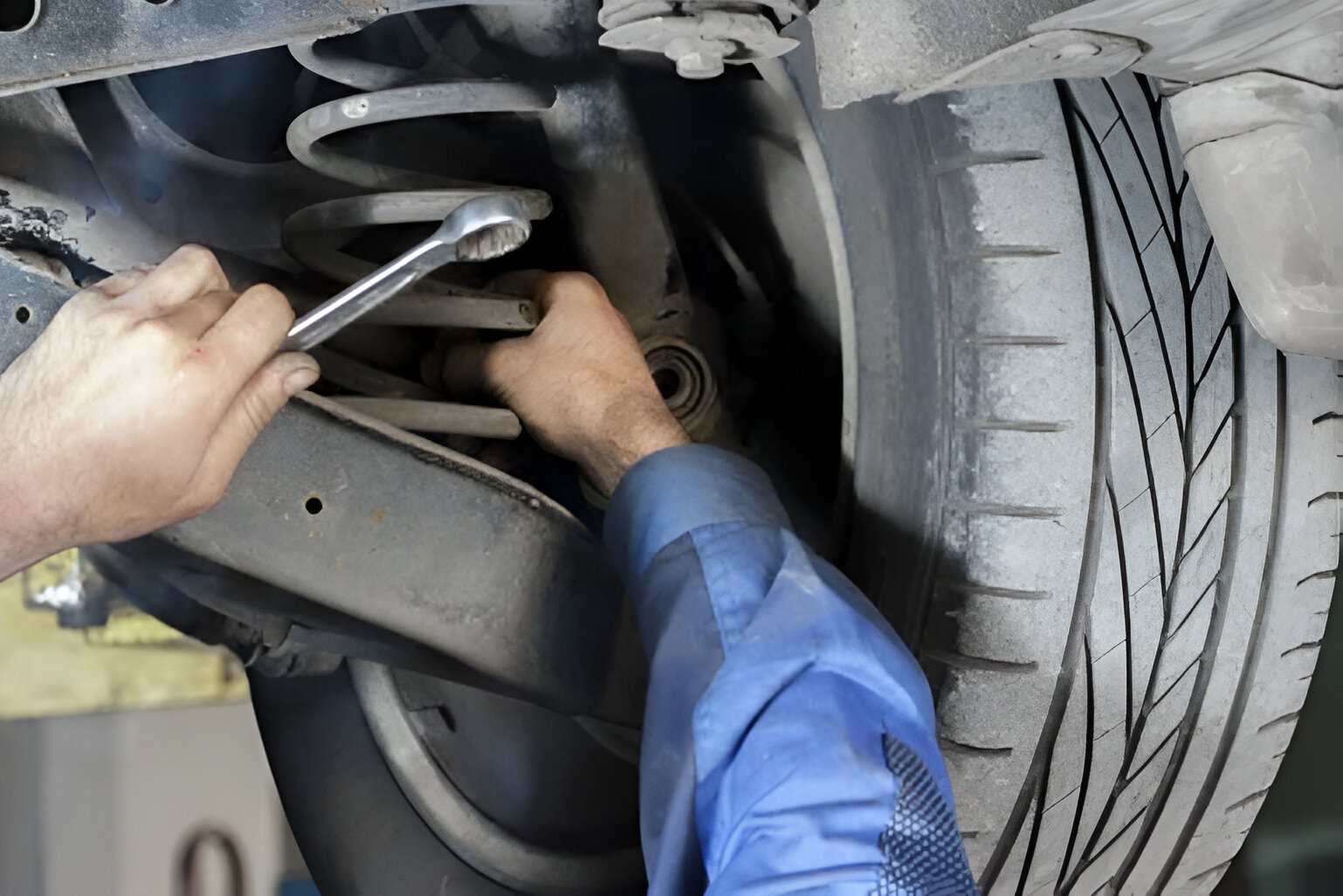
Springs support the weight of the vehicle and absorb road impacts. If springs become weak, sag, or break, sometimes due to age, heavy loads, or rough roads, the vehicle’s ride height can become imbalanced.
Watch for: one side or corner of the car sitting lower, uneven ride height, poor handling when cornering or braking, or a rough, uneven ride.
Worn Bushings, Ball Joints, or Control Arms
These components connect suspension, wheels, and frame, ensuring controlled movement and stability. When they wear or loosen, you might hear clunking or knocking over bumps or turns, experience vague steering, or unstable braking feedback.
Watch for: unusual noises over bumps, steering wheel vibrations or drifting, and instability when braking or steering.
Excessive Body Roll or Sway
A failing suspension may allow the car to lean or sway excessively during turns or braking, especially in sudden stops or emergency manoeuvres. This compromises tyre grip, braking stability, and overall control.
Watch for: the car feeling unstable in corners, swaying when changing lanes or braking, or an uncomfortable, unbalanced ride.
Why Ignoring Suspension Problems Undermines Brake & Clutch Work
Even high-quality brake pads or clutch repairs won’t deliver safe performance if the suspension is compromised. Poor suspension reduces tyre grip, creates a weight imbalance, and affects braking dynamics.
This results in:
- longer stopping distances
- uneven braking
- premature tyre and brake wear
Therefore, a holistic approach to vehicle maintenance, combining suspension inspections with brake and clutch services as part of regular car servicing, is essential for safety, handling, and reliable braking performance.
How to Check Your Suspension: DIY or Professional
- Pay attention to ride quality and handling: If your car feels bouncy over bumps, sways on turns, or nose-dives when braking, treat it as a warning.
- Monitor tyre wear: Uneven tread wear can signal suspension geometry issues or worn components.
- Look at ride height: Park on level ground and check whether one side sits lower than the other; sagging springs often cause imbalance.
- Listen for noises: Clunking, knocking, or creaking over bumps or turns often points to worn bushings, ball joints, or suspension links.
- Regular car servicing: A professional check will examine shock absorbers, springs, bushings, control arms, wheel alignment, and more.
Frequently Asked Questions
