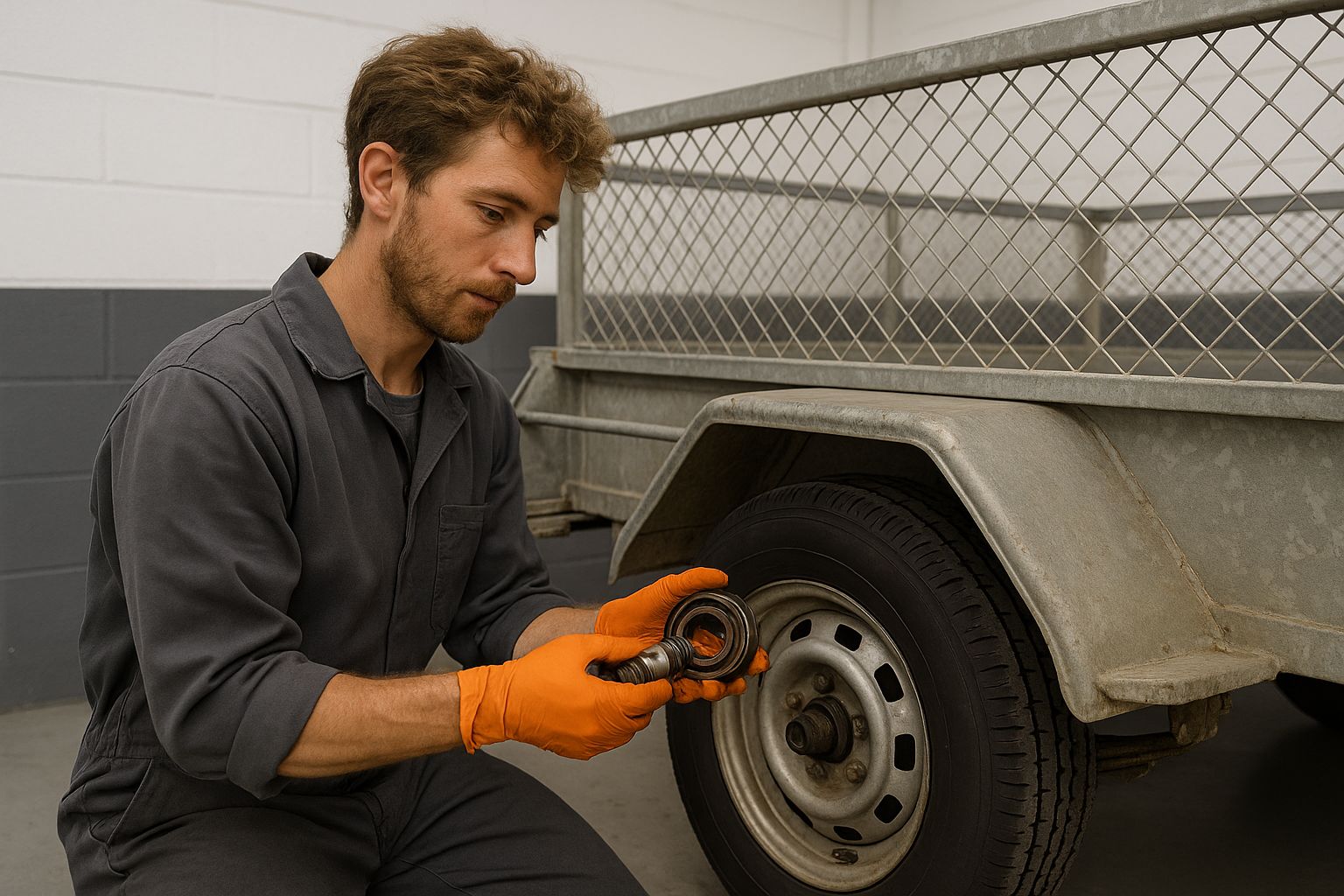
If you tow a trailer, caravan, boat trailer, or work trailer across Sydney, you already know how important safe braking and smooth towing are. But one of the most overlooked components behind towing stability and braking control is the trailer bearing. These small but critical parts ensure that your trailer wheels rotate freely without excessive friction or overheating. When trailer bearings are worn, dry, or poorly maintained, they can dramatically increase braking distance, reduce handling stability, and lead to dangerous on-road failures.
Regular repacking and servicing of your trailer bearings is essential not only for performance but also for towing safety. Below, we’ll break down the importance of repacking, the warning signs of worn bearings, and why it directly affects your braking system, even if your brakes and clutch services are up-to-date.
What Is a Trailer Bearing and Why Does It Matter?
A trailer bearing is a metal component filled with grease that allows the wheel hub to rotate smoothly around the axle. The bearing reduces friction and ensures the trailer wheel spins freely at high speeds.
When the bearing dries out, becomes contaminated, or wears down, the wheel can begin to bind, heat up, wobble, or seize. This is where towing and braking danger begins.
With a heavy load behind your vehicle, whether you’re carrying tools, equipment, a boat, or landscaping materials, a poorly maintained bearing can:
- Affect your braking control
- Reduce towing stability
- Increase tyre and hub heat
- Cause trailer sway
- Lead to complete wheel failure
This makes regular trailer bearing repacking a critical part of safe towing and overall vehicle health.
Why Trailer Bearing Repacking Affects Braking Performance
Your brakes rely on predictable, even wheel rotation to work properly. When a trailer bearing is worn or running dry, the wheel may not spin consistently, which puts extra strain on the braking system.
1. Increased Heat = Reduced Braking Power
Friction from a failing bearing creates heat that can travel into the hub and brake assemblies. This heat reduces braking effectiveness and increases the risk of brake fade, especially on Sydney hills, motorways, or long towing trips.
2. Wheel Wobble Affects Brake Accuracy
A damaged bearing can cause the wheel to wobble. This distortion affects brake drum or disc alignment, meaning your brakes can’t apply force evenly.
3. Longer Stopping Distances
A seized or partially seized trailer wheel dramatically increases the load on your vehicle’s braking system, making stopping distances longer and more dangerous.
4. Trailer Sway Risks
If one wheel is dragging because of a failing bearing, the trailer may pull to one side, increasing sway and reducing control, especially in wet weather or when travelling at speed.
Warning Signs Your Trailer Bearing Needs Repacking
Sydney drivers often miss early signs of bearing wear. Make sure you watch out for the following:
Strange Grinding or Rumbling Noises
Unusual noise from the wheel hub often indicates a dry or damaged trailer bearing.
Hot Wheel Hubs After Driving
After towing, carefully place your hand near the hub (without touching it directly). Excess heat is a clear sign that the bearing needs attention.
Wheel Wobble or Vibration
Jack up your trailer and try to wiggle the wheel side-to-side. Any movement usually means the bearing is loose or worn.
Grease Leakage Around the Hub
Old or damaged seals allow grease to escape, which leaves your bearing unprotected.
Reduced Braking Stability
If the trailer feels unstable when braking, swaying, or taking longer to stop, the bearings may be the cause.
How Often Should You Repack a Trailer Bearing?
In Australia, the recommended schedule is:
- Every 10,000 km (kilometres), or
- Every 12 months, whichever comes first
- More frequently, if you tow heavy loads, use boat trailers (exposed to water), or often drive long distances
Repacking includes cleaning the bearing, inspecting for wear, applying fresh high-temperature grease, and replacing seals if necessary. It is one of the simplest ways to improve towing safety.
Why You Should Combine Trailer Bearing Maintenance with Brake and Clutch Services
Trailer bearings, brakes, suspension, and towing systems work together. When one fails, the others come under increased stress.
By combining bearing inspections with brake and clutch services, you ensure:
- Your braking system operates under normal load
- Your towing setup remains stable
- You minimise the chance of a roadside breakdown
- Wear patterns are detected early
- Overall car servicing is more complete and cost-effective
Frequently Asked Questions
