If you regularly tow a caravan, boat trailer, or work trailer, you may have wondered: how do brakes on a trailer work, and why does it matter so much? Trailer braking systems play a vital role in maintaining safe stopping distances, particularly when hauling heavy loads on busy Sydney roads.
When you attach a trailer to your vehicle, the total weight increases significantly. Without proper trailer brakes, the towing vehicle’s braking system can become overloaded, leading to reduced stopping power and increased accident risk. Understanding how trailer braking systems function helps you stay safer on the road and keeps your equipment in roadworthy condition.
Why Trailer Brakes Are Important
The primary reason trailer brakes exist is to assist your towing vehicle when slowing down or stopping. A trailer without brakes puts extra strain on your vehicle’s braking system, which can lead to overheating, longer stopping distances, and premature wear on components.
When working correctly, trailer brakes can:
- Improve stopping distance
- Reduce strain on your vehicle brakes
- Increase towing stability
- Prevent trailer sway
- Improve overall road safety
This is why regular inspections and maintenance are essential, alongside routine car servicing and professional brake and clutch services.
Types of Trailer Braking Systems
To get a clearer picture of how trailer brakes work, it helps to understand the different types of systems available.
Electric Trailer Brakes
Electric trailer brakes are the most common braking system used in caravans and larger trailers. These systems are controlled by an electric brake controller installed in the towing vehicle.
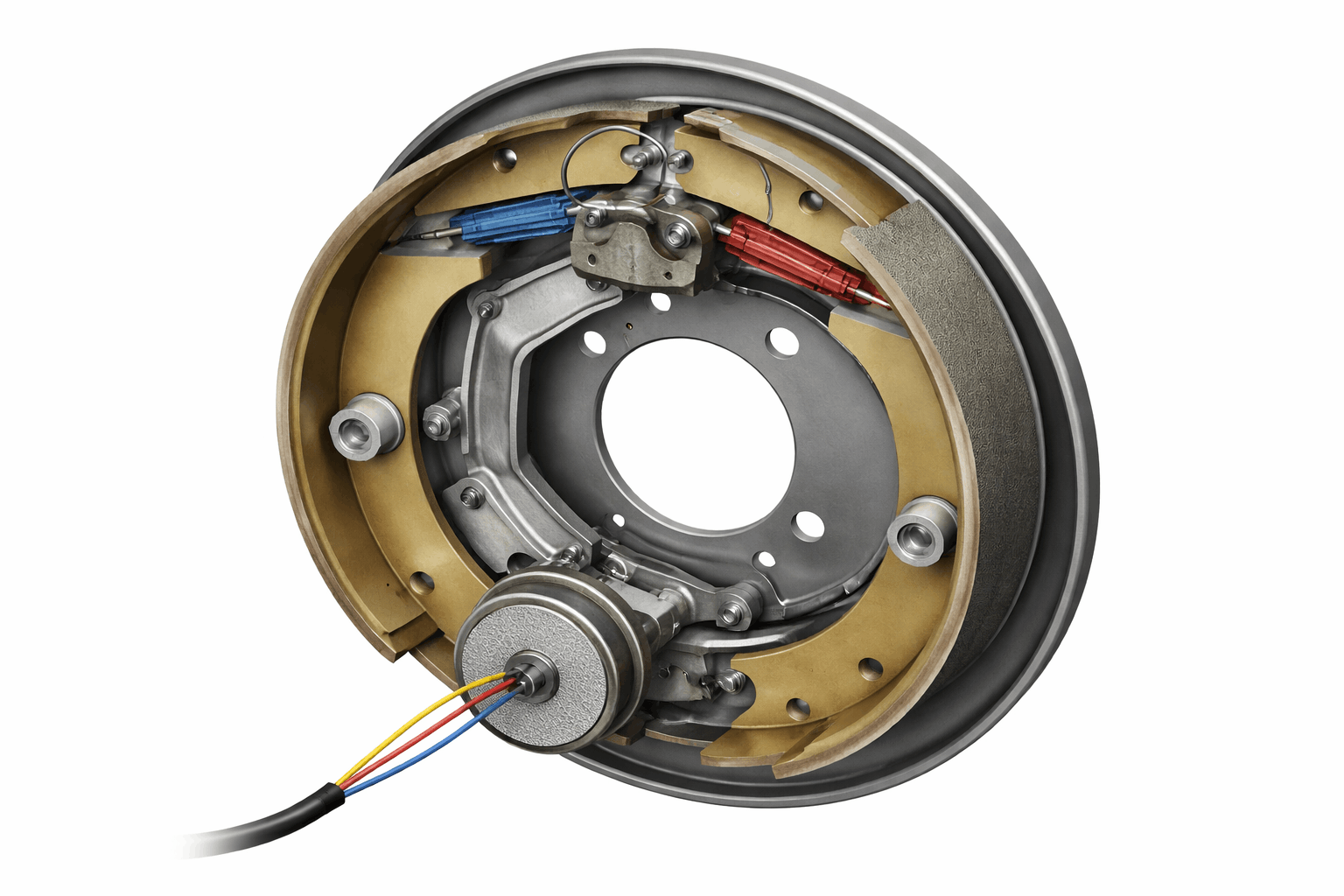
When the driver presses the brake pedal, the controller sends an electrical signal to magnets inside the trailer brake drums. These magnets engage the brake shoes, which press against the drum and slow the trailer wheels down.
Electric trailer brakes provide smooth and adjustable braking, making them ideal for heavier towing loads.
Hydraulic Surge Brakes
Hydraulic surge brakes work a little differently. Rather than relying on an electrical signal, they use the forward momentum of the trailer as the towing vehicle slows.
When the towing vehicle brakes, the trailer moves slightly forward, compressing a hydraulic actuator in the coupling. This pressure activates the hydraulic braking system, applying brake force to the trailer wheels.
Surge brakes are commonly found on boat trailers because they operate independently of electrical systems.
Electric Over Hydraulic Brakes
Electric-over-hydraulic systems combine both technologies. The electric brake controller activates a hydraulic pump, which applies braking pressure to the trailer wheels.
These systems provide strong braking performance and are often used in heavy-duty towing applications such as large caravans or commercial trailers.
Key Components of a Trailer Brake System
To fully understand how a trailer’s braking system operates, it’s useful to look at the main components involved.
Brake Controller
Installed inside the towing vehicle, this device regulates braking force and ensures the trailer brakes activate at the correct time.
Brake Drums or Discs
These components create friction to slow the trailer wheels when braking pressure is applied.
Brake Magnets or Hydraulic Actuators
These components activate the braking mechanism depending on the type of system used.
Wiring and Connectors
Electrical wiring connects the towing vehicle to the trailer braking system, ensuring signals are transmitted correctly.
Regular inspections of these components during caravan servicing or truck servicing help prevent towing issues.
Signs Your Trailer Brakes Need Attention
Trailer braking systems take a lot of punishment and should be checked over regularly. Some warning signs include:
- Trailer pushing the towing vehicle during braking
- Unusual noises while stopping
- Uneven braking performance
- Increased stopping distance
- Overheating brake components
If you notice any of these warning signs, our professional specialised services can diagnose and repair your trailer brakes before a small issue turns into a serious safety risk.
Maintaining Your Trailer Brakes
Keeping up with routine maintenance is the best way to ensure your trailer braking system stays reliable and safe. Recommended maintenance includes:
- Inspecting brake pads and drums
- Checking electrical connections and wiring
- Testing brake controller settings
- Inspecting wheel bearings and suspension components
- Ensuring correct weight distribution
Combining trailer maintenance with regular car servicing ensures your towing vehicle and trailer operate safely together.
Frequently Asked Questions
