If you have ever felt your car drifting to one side of the road while you are trying to drive straight, or noticed your steering wheel vibrating as you cruise along the M4, you are likely experiencing the symptoms of poor wheel alignment. For drivers in Sydney, where road surfaces can range from smooth motorways to pothole-riddled suburban streets, maintaining a precise vehicle alignment is not just about comfort; it is a critical aspect of vehicle safety and good vehicle management.
In this comprehensive guide, we will break down the mechanics of alignment, why it matters for your tyres, and what you can expect when you book your car in for professional car servicing.
Understanding the Basics: What is Wheel Alignment?
Many people assume that tyre alignment refers to a literal adjustment of the tyres themselves. In reality, it is a complex adjustment of the vehicle’s suspension system, the collection of components that connects a vehicle to its wheels. It is not an adjustment of the tyres or wheels, but rather the angles at which they make contact with the road.
When your car leaves the factory, the manufacturers have set specific angles for the wheels to ensure optimal handling, grip, and fuel efficiency. Over time, hitting a kerb, driving over a deep pothole in the Inner West, or simply the wear and tear of daily commuting can knock these angles out of specification.
The Three Pillars of Alignment
When a technician performs a tyre alignment, they are looking at three primary angles:
- Camber: This is the inward or outward angle of the tyre when viewed from the front of the vehicle. Too much inward or outward tilt (positive or negative camber) indicates improper alignment and will cause uneven tyre wear.
- Toe: This is the extent to which your tyres turn inward or outward when viewed from above. Think of it like looking down at your own feet; “toe-in” means the fronts of the tyres are closer together than the rears.
- Caster: This angle identifies the forward or backward tilt of your steering axis when viewed from the side. A proper caster ensures your steering is stable and that the wheel returns to the centre after a turn.
Why Sydney Drivers Need Regular Vehicle Alignment
Sydney presents a unique set of challenges for any vehicle. From the steep hills of the Northern Beaches to the constant stop-start traffic of the CBD, your suspension is under a high amount of stress.
1. Extending Tyre Life
Tyres are one of the most expensive recurring costs for any car owner. If your wheel alignment is off by even a few millimetres, it can cause “scrubbing.” This is where the tyre is essentially dragged sideways across the road as you drive forward. This leads to premature balding, often on just one edge of the tyre, forcing you to replace an entire set long before their time.
2. Fuel Efficiency and the Environment
When your wheels are not pointing in the correct direction, there is more rolling resistance. Your engine has to work harder and consume more fuel to push the car forward. In an era of high petrol prices at Sydney pumps, a precise tyre alignment is an investment that pays for itself at the tank.
3. Safety and Handling
A car that pulls to one side is a safety hazard, especially in wet weather or emergency braking situations. Proper alignment ensures that your car’s electronic stability control and Anti-lock Braking System (ABS) function as intended. If you have recently invested in brake repairs or upgrades, an alignment is the final step to ensure that stopping power is applied evenly to the road.
Signs Your Car Needs a Wheel Alignment
Your car will usually tell you when something is wrong. Being proactive about these signs can prevent expensive suspension and steering repairs later on.
- Vehicle Pulling: If the car consistently drifts to the left or right when you relax your grip on the steering wheel.
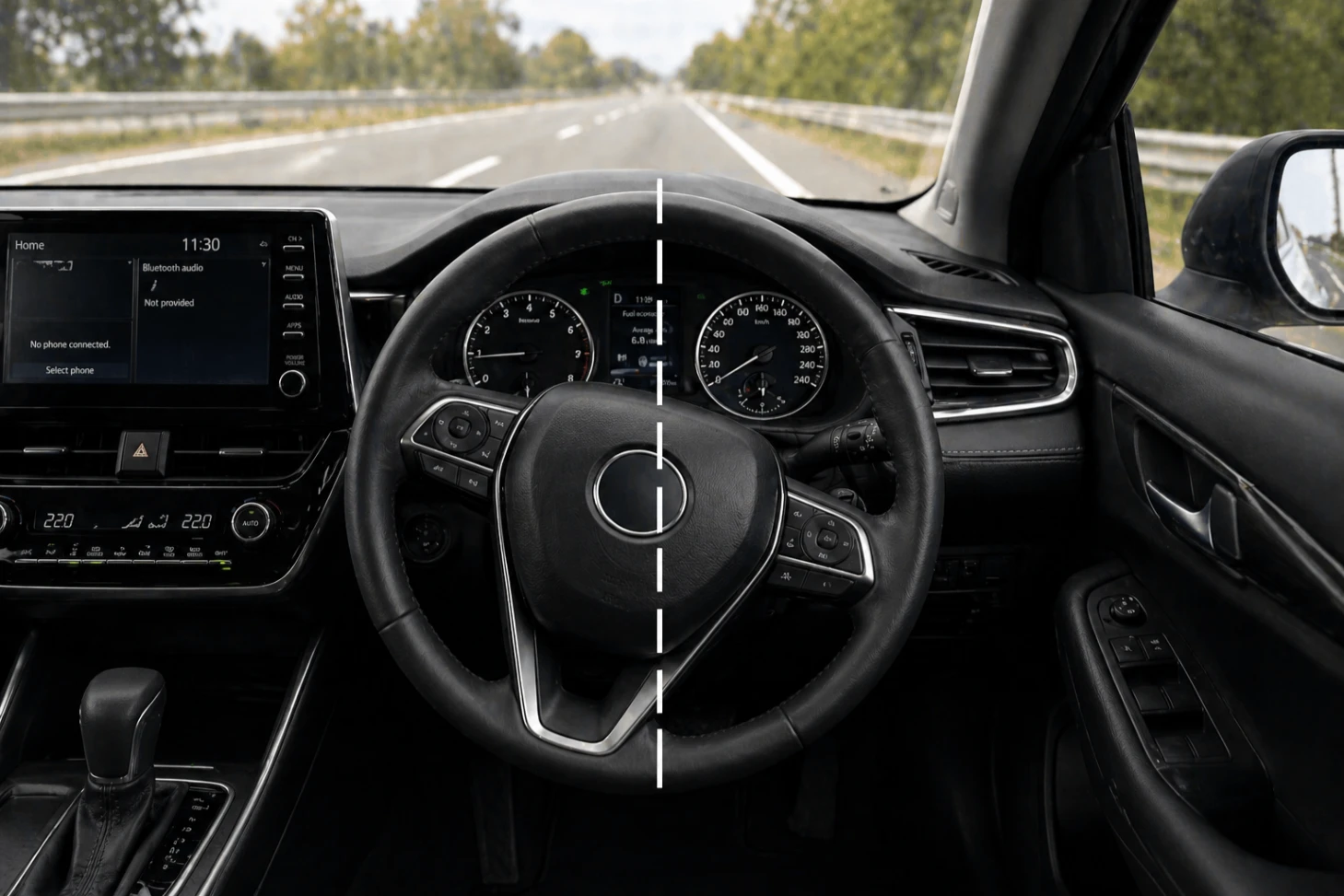
- Off-Centre Steering Wheel: When driving straight, your steering wheel should be perfectly level. If the logo in the centre is tilted, your alignment is out.
- Uneven Tyre Wear: Check your tread. If the inside of the tyre is balder than the outside (or vice versa), your camber or toe angles are likely incorrect.
- Squealing Tyres: If you hear your tyres protesting even during slow turns in a car park, they are likely scrubbing against the bitumen.
Wheel Balancing and Alignment: What is the Difference?
These two terms are often grouped as wheel balancing and alignment, but they address two different issues.
- Wheel Alignment corrects the angles of the wheels so they are parallel to each other and perpendicular to the ground.
- Wheel Balancing corrects the weight distribution around the tyre and wheel assembly. A technician uses a balancing machine to find heavy spots and attaches small lead weights to the rim to ensure the wheel spins smoothly.
If you feel a vibration through the steering wheel, specifically at high speeds (usually 80km/h and above), you likely need balancing. If the car pulls to the side, you need an alignment. At Warringah Brake & Clutch, we recommend doing both simultaneously to ensure a perfectly smooth ride.
The Costs of Wheel Alignment in Sydney
The cost of a tyre alignment in Sydney typically ranges from $80 to $180, depending on several factors:
- Type of Vehicle: Luxury European cars or large 4WDs often require more complex adjustments and specialised software.
- Two-Wheel vs. Four-Wheel Alignment: Most modern cars with independent rear suspension require a four-wheel alignment, whereas some older rear-axle vehicles only need the front two wheels adjusted.
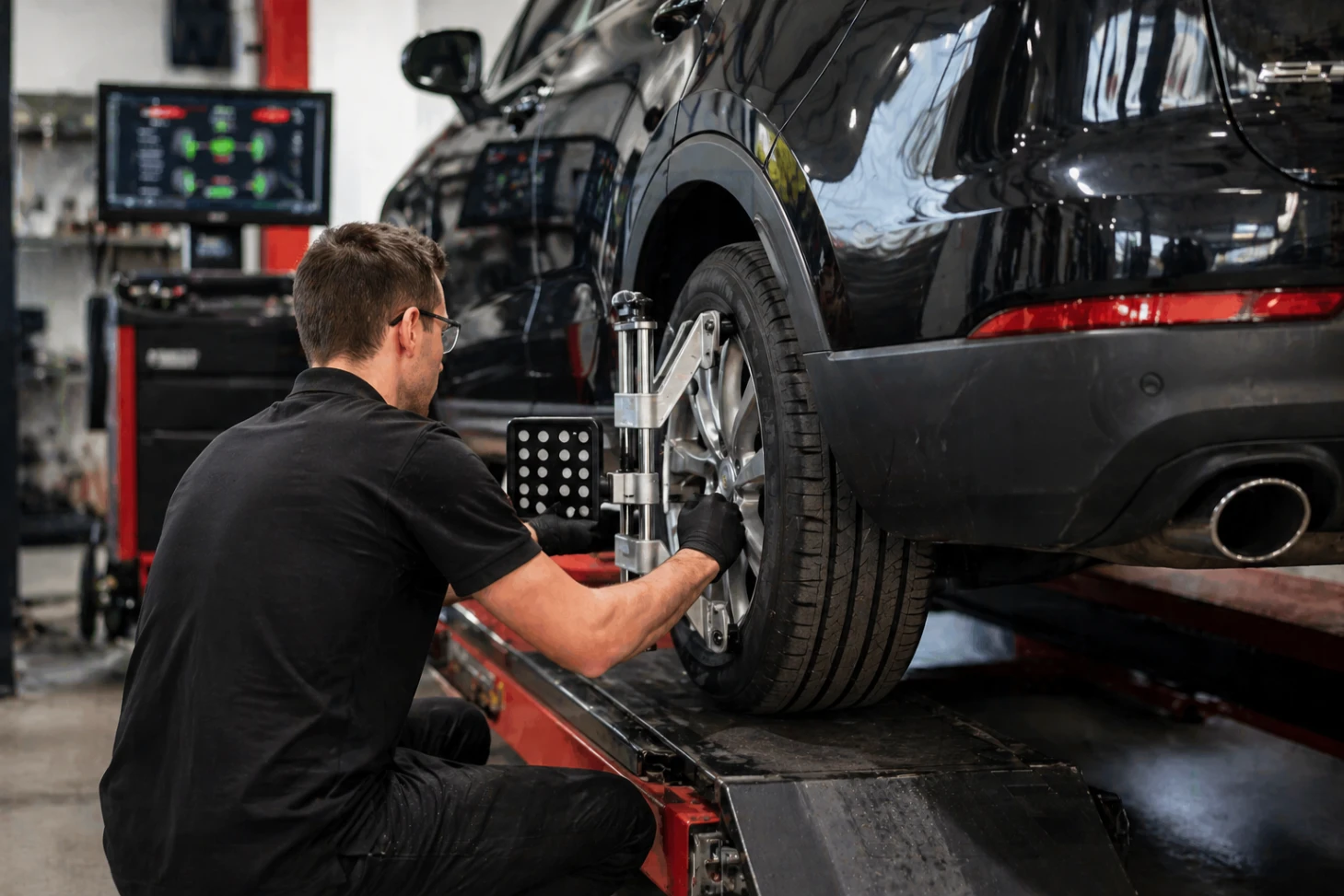
- Technology Used: Advanced 3D laser alignment systems provide higher precision than older manual methods, which may reflect in the price but offer much better results.
Considering that a new set of quality tyres can cost upwards of $800, a $100 alignment is a small price to pay to protect that investment.
Integration with General Maintenance
A wheel alignment should not be an isolated event. It is often the “finishing touch” after other mechanical work.
- After Suspension Work: If you have replaced struts, shocks, or control arms, an alignment is mandatory.
- After a Rego Inspection: If your rego inspection reveals uneven tyre wear, an alignment is usually the prescribed cure.
- New Tyres: Always align your wheels when fitting new rubber to ensure they start their life with the best possible contact patch.
If you are experiencing vibrations or clunking noises alongside alignment issues, it may also point to worn suspension components such as CV joints or control arm bushings, which can produce similar sensations and are worth inspecting at the same time.
Frequently Asked Questions
