
For many Sydney drivers, the daily commute involves the stop-start grind of the M4, the coastal humidity of the Northern Beaches, or the hilly terrain of the North Shore. These conditions put an immense amount of pressure on one of your car’s most complex components: the automatic gearbox.
While almost every driver knows they need to change their engine oil regularly, there is often confusion surrounding automatic transmission fluid (ATF). Some manufacturers claim their fluid is “filled for life,” while mechanics argue for regular intervals.
In this guide, we’ll cover why automatic transmission fluid is vital, how Sydney’s driving conditions affect its lifespan, and the clear warning signs that your gearbox needs attention.
What Does Automatic Transmission Fluid Actually Do?
To understand why regular servicing matters, it helps to know what ATF actually does inside your gearbox. Unlike engine oil, which primarily lubricates, ATF is a multi-tasking workhorse that performs four critical roles:
- Hydraulic Fluid: It provides the pressure needed to engage the clutches and bands that shift your gears.
- Coolant: It carries heat away from the internal components to the transmission cooler.
- Lubricant: It prevents metal-on-metal wear between the intricate planetary gears.
- Cleaning Agent: It contains detergents that keep the internal valves and sensors free from sludge and debris.
The Big Question: How Often Should You Change It?
The “universal” answer used to be every 50,000 kilometres, but modern engineering has changed the landscape. However, for drivers navigating Sydney’s high-intensity conditions, the following guidelines are the gold standard for any automatic transmission service.
1. The Standard Interval (50,000km to 100,000km)
Most automotive experts recommend a fluid change every 50,000km to 80,000km. This ensures the fluid’s viscosity remains stable and the protective additives are still active. If you hit the 100,000km mark on original fluid, you are entering a “high-risk” zone where internal wear accelerates.
2. The “Harsh Conditions” Factor
Manufacturers often provide a “Normal” and a “Severe” service schedule. Almost all Sydney driving falls under the “Severe” category due to:
- Stop-Start Traffic: Constantly shifting between first and second gear generates massive heat.
- Towing: Pulling a boat or caravan places an extreme load on the transmission, accelerating fluid breakdown and heat build-up.
- Heat: Sydney summer days (35°C+) mean the transmission cooler has to work significantly harder to keep ATF temperatures stable.
3. The “Filled for Life” Myth
Many modern vehicles come with “sealed” transmissions and a “lifetime” fluid claim. In the mechanical world, “lifetime” usually refers to the manufacturer’s warranty period (e.g., 5–8 years or 150,000km), not the actual life of the car. If you plan on keeping your car for 10+ years, ignoring the automatic transmission fluid is a recipe for a $5,000 repair bill.
Signs Your Transmission Fluid Needs Changing
Your car will usually tell you when the gearbox fluid is degraded. If you experience any of the following, do not ignore them:
- Slipping Gears: If the engine revs up but the car doesn’t seem to accelerate, or if it unexpectedly pops out of gear, the fluid pressure is likely insufficient.
- Rough or Delayed Shifts: If the car “clunks” into gear or hesitates for a second before shifting, the fluid has likely lost its hydraulic properties.
- Unusual Noises: Whining, grinding, or humming from underneath the vehicle often points to a clogged transmission filter or fluid that has thinned past its operating range.
- The “Burning” Smell: If you notice an acrid or sweet, burnt smell after a drive, the fluid has overheated and can no longer protect the internal components.
- Fluid Discolouration: Healthy ATF is typically bright red or pink. If you check the dipstick and find it is dark brown or black, or if it smells burnt, it needs immediate replacement.
Transmission Service vs. Transmission Flush
When you bring your car in for a transmission service, you will likely be offered two options:
The Standard Service
This involves dropping the transmission pan, draining about 40–60% of the fluid, and replacing the filter. This is the safest method for older cars, as it introduces fresh additives without disturbing the internal “settled” debris too aggressively.
The Full Flush
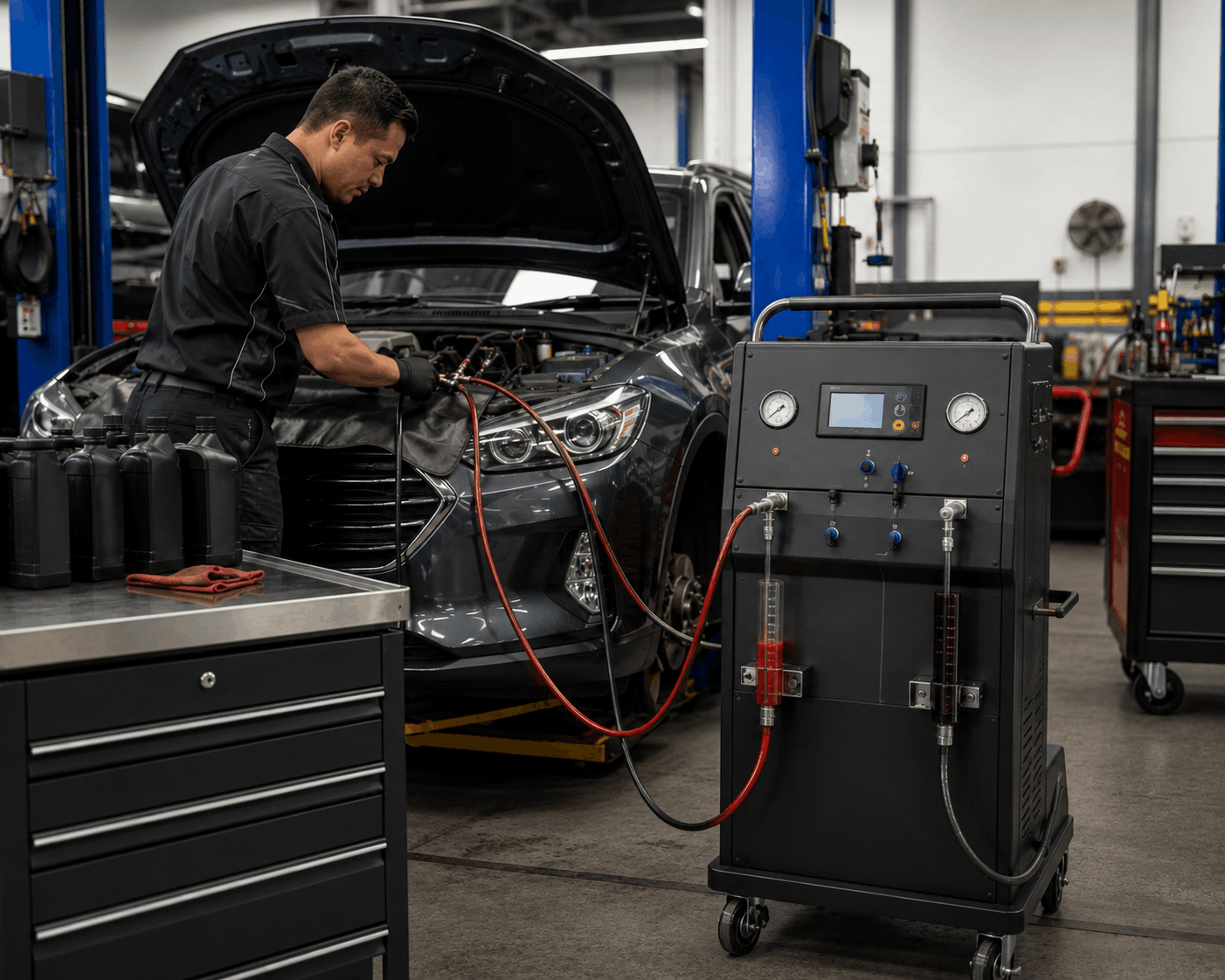
A machine pumps out 100% of the old fluid and replaces it with fresh ATF. While thorough, this is generally recommended for newer cars or as a preventative measure before the fluid is heavily burnt.
Why Maintenance Saves You Money in Sydney
The average cost of a transmission fluid service in Sydney ranges from $180 to $350. In contrast, a full automatic transmission rebuild or replacement can cost anywhere from $3,500 to $7,000.
By staying on top of your automatic transmission fluid changes, you:
- Boost Fuel Economy: Fresh automatic transmission fluid reduces internal friction, allowing the drivetrain to transfer power more efficiently.
- Ensure Smooth Shifts: No more jerky movements during the morning crawl on the Sydney Harbour Bridge.
- Protect Resale Value: A logbook showing regular transmission care is a major selling point for used car buyers.
Frequently Asked Questions
