There is a unique sense of liberation that comes with hitching up the van and heading out of Sydney, leaving the hustle of the CBD behind for the serenity of the South Coast or the rugged beauty of the Blue Mountains. However, that freedom relies entirely on the structural and mechanical integrity of your rig. Whether you are a Grey Nomad embarking on a lap of the country or a young family heading to a local caravan park for the school holidays, understanding the essentials of caravan repairs is the difference between a dream holiday and a roadside nightmare.
Maintaining a caravan is far more complex than looking after a standard car. You are essentially managing a house that is subject to constant “earthquakes” every time it hitches to a tow ball and travels at 100km/h. From managing water ingress to ensuring the braking system can handle a steep descent down Mount Ousley, a proactive approach to caravan servicing and maintenance is vital. In this guide, we will explore the most common issues owners face and provide expert solutions to keep your home-away-from-home in peak condition.
1. The Foundation of Safety: Why Caravan Servicing Matters
Many owners make the mistake of thinking that because their caravan doesn’t have an engine, it doesn’t need regular professional attention. This couldn’t be further from the truth. Caravan servicing focuses on the critical safety components that keep the trailer stable and responsive behind your tow vehicle.
Wheel Bearings and Hubs
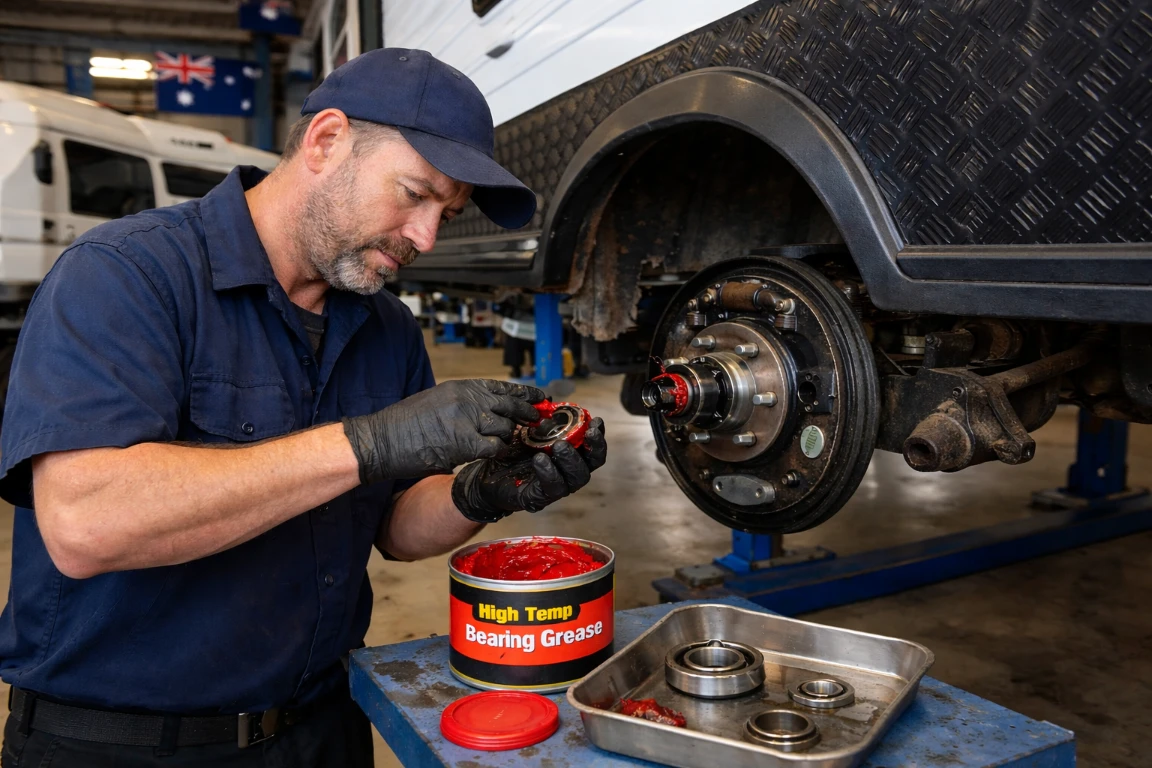
The wheel bearings carry the entire weight of your van. Over time, the grease inside the hubs can break down or become contaminated by dust and water, especially if you’ve been doing creek crossings or coastal driving. During a standard service, a technician will strip the hubs, inspect the bearings for “pitting” or blueing (a sign of extreme heat), and repack them with high-quality marine-grade grease.
Braking Systems
Most Australian caravans are fitted with electric drum brakes. These require regular adjustment to ensure both sides are braking evenly. If one side grabs harder than the other, it can cause the van to sway dangerously during emergency braking. A professional service includes checking the brake shoe thickness and ensuring the “magnets” are engaging correctly. If you’ve noticed a decline in stopping power, it might be time for brake repairs and upgrades to ensure your tow tug isn’t doing all the heavy lifting.
2. Structural Integrity: Can You Repair Caravan Panels?
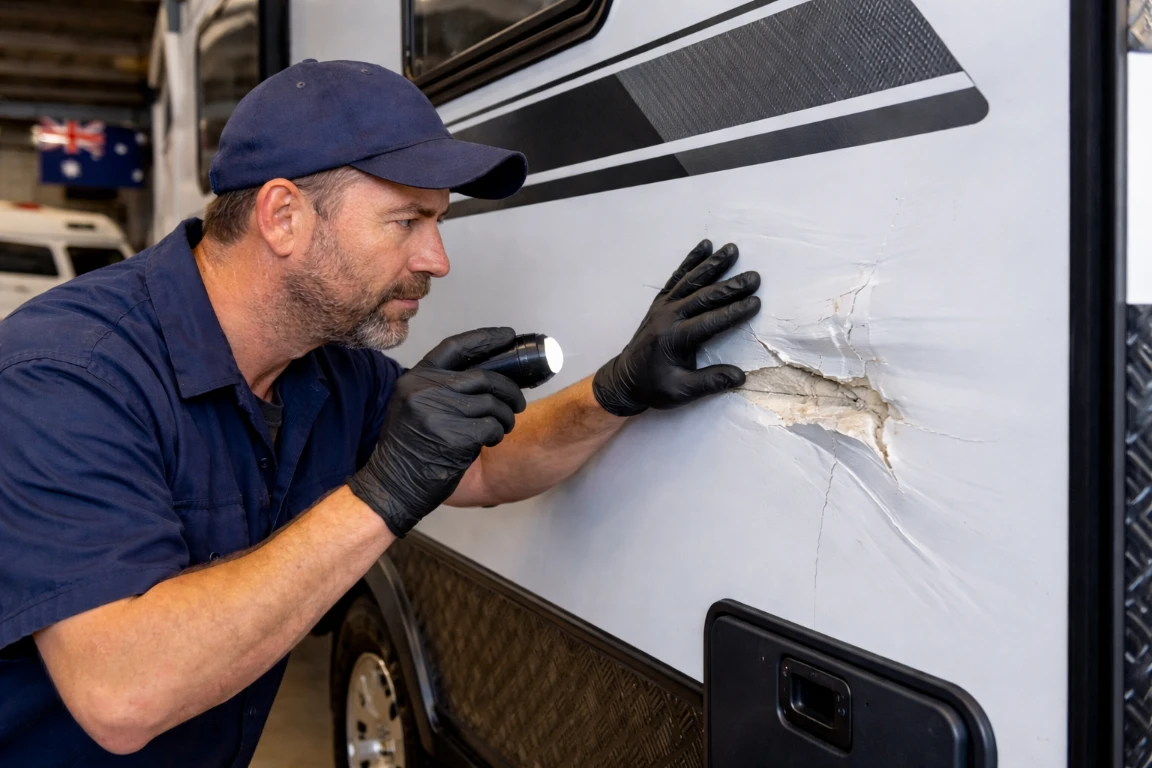
One of the most frequent questions we hear from owners who have had a mishap with a low-hanging branch or a tight gatepost is: can you repair caravan panels? The answer is yes, but the method depends entirely on the construction of your van.
Aluminium Stucco Sheeting
Older or traditional “stick-and-tin” caravans use interlocking aluminium panels. If a single panel is dented or pierced, it can often be replaced individually. However, the challenge lies in matching the paint fade of the surrounding older panels. Small punctures can sometimes be filled and resprayed, but for structural water-tightness, replacing the section is usually the best form of caravan repairs.
Composite and Fibreglass Sandwich Panels
Modern caravans often feature smooth composite walls. These provide excellent insulation but can be trickier to fix if cracked. Can you repair caravan panels made of composite? Yes, through a process of fibreglass patching, sanding, and gel-coat matching. This requires a steady hand and professional equipment to ensure the repair is invisible and, more importantly, remains sealed against the elements.
3. Water Ingress: The Silent Caravan Killer
In Sydney’s humid climate and during our heavy East Coast Lows, water is the number one enemy of the caravan. A tiny leak in a roof seal can lead to rotted frames and toxic mould before you even notice a damp smell.
Identifying Leaks
Don’t wait for a water stain to appear on the ceiling. Part of your regular DIY maintenance routine should include a visual inspection of all external sealants. Look for “chalking” or cracking in the silicone around window frames, door seals, and roof hatches.
The Resealing Process
If you find a leak, the “quick fix” of squirt-on silicone over the old seal rarely works. Proper caravan repairs involve removing the old sealant entirely, cleaning the surface with wax and grease remover, and applying a high-quality polyurethane sealant (like Sikaflex). This ensures a bond that can handle the vibrations of Australian corrugated roads.
4. DIY Maintenance: How to Repair a Caravan at Home
While major structural work should be left to the experts, knowing how to repair a caravan for minor issues can save you time and money. Here are three common DIY tasks:
Fixing a Leaking Tap or Pipe
Caravan plumbing uses plastic “push-fit” joiners. Over time, the vibrations of travel can loosen these. Always carry a few spare joiners and a roll of Teflon tape. If you notice water pooling in a cupboard, it’s usually a simple matter of re-seating a hose or replacing a perished O-ring.
Maintaining the Awning
A torn awning is a common sight at caravan parks. You can perform minor caravan repairs on small tears using specialised awning repair tape. To prevent damage, always ensure the fabric is dry before rolling it up for long periods, which prevents mould from eating through the vinyl.
12V Electrical Troubleshooting
If your lights are flickering, the culprit is often a loose connection at the battery terminals or a blown fuse. Invest in a simple multimeter. Learning the basics of how to repair a caravan electrical circuit can prevent a dark night in the bush. Check your vehicle’s charging system to ensure the alternator is actually topping up the house batteries while you drive.
5. Chassis and Suspension: The Backbone of the Rig
Underneath the shiny panels lies the chassis, the most stressed part of the vehicle. In Sydney, many caravans spend time near the coast, where salt air accelerates corrosion.
Rust Prevention
Regularly inspect the chassis for “spiderweb” cracks or surface rust. If you see rust forming, wire-brush it back and apply a cold-galvanised spray. For heavy-duty off-road vans, check the “trailing arm” suspension bushings. If these are perished, the van will “dog-track” (pull to one side), causing excessive tyre wear and poor fuel economy. Maintaining your suspension and steering components on the tow vehicle is equally important for a balanced setup.
The Importance of Weight Distribution
Many caravan repairs are caused by overloading. An overloaded van puts immense pressure on the axles and the A-frame. Ensure you know your GTM (Gross Trailer Mass) and ATM (Aggregate Trailer Mass). If your van is sagging, it might be time for upgraded springs or a weight distribution hitch.
6. Gas and Appliance Safety
If your caravan has a gas cooktop, fridge, or hot water system, safety is non-negotiable.
- Gas Inspections: NSW regulations require gas systems to be certified. If you smell gas, turn off the cylinders immediately.
- Fridge Efficiency: If your 3-way fridge isn’t cooling on 12V while driving, it’s often a wiring gauge issue. This is a common part of comprehensive caravan servicing.
For peace of mind, ensure your van undergoes a safety check or rego inspection annually to verify all systems are compliant with Australian standards.
Frequently Asked Questions
