
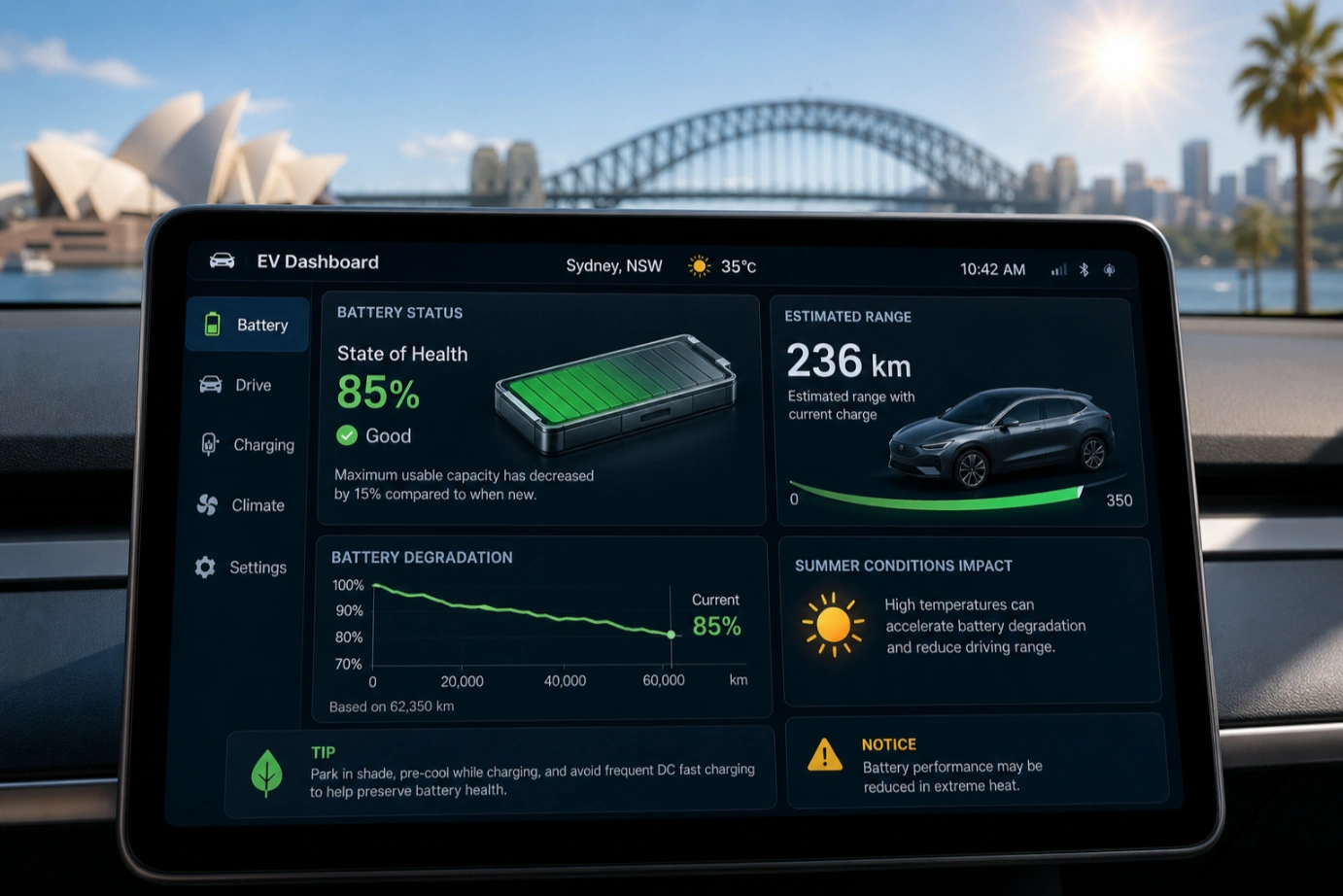
The shift towards electric vehicles (EVs) across New South Wales has been nothing short of a revolution. From the sleek sedans navigating the Sydney CBD to the family SUVs parked in the leafy streets of the North Shore, electric cars are no longer a futuristic novelty. They are a daily reality. However, as the market matures in 2026, the initial “honeymoon phase” for many owners is giving way to the practical realities of long-term EV ownership.
While EVs offer a smooth ride, lower running costs, and significant environmental benefits, they are not without their hurdles. Understanding the issues with electric cars is essential for anyone looking to make the switch or for current owners wanting to maximise their vehicle’s lifespan. In this guide, we cover the technical, practical, and financial issues with electric cars in detail, giving every Sydney driver the knowledge to stay ahead.
1. Battery Health and Range Anxiety: The Core Concerns
The battery is the heart of an electric car, and it is also the source of the most common problems with electric vehicles. While battery technology has improved significantly, two main factors continue to dominate owner discussions: battery degradation and real-world range accuracy.
Battery Degradation Over Time
Like the battery in your smartphone, an EV battery loses its capacity to hold a full charge over time. In Australia’s harsh climate, heat is the primary enemy. Sydney’s scorching summer days can accelerate the chemical breakdown within lithium-ion cells.
- The Problem: You might find that after five years of ownership, your “450km range” has dropped to 380km.
- The Solution: Avoid “deep cycling” your battery. Keeping your charge between 20% and 80% for daily use can significantly extend the life of the cells.
Real-World vs. Advertised Range
One of the biggest electric vehicle reliability issues is the gap between the manufacturer’s laboratory-tested range and real-world performance. In Sydney, heavy traffic on the M5 or the constant stop-start of Parramatta Road can eat into your range faster than expected.
- The Problem: Independent testing in Australia has shown that real-world range can be 5% to 23% lower than advertised claims.
- The Solution: Always plan your trips with a 20% “safety buffer,” especially when heading out of the city towards regional areas where chargers are sparse.
2. Infrastructure Hurdles: The Sydney Charging Paradox
Sydney presents a unique challenge for EV owners. Charging infrastructure is one of the most frequently raised issues with electric cars in Australia’s most populous city, and it hasn’t always kept pace with the explosive growth of EV sales.
Public Charger Reliability
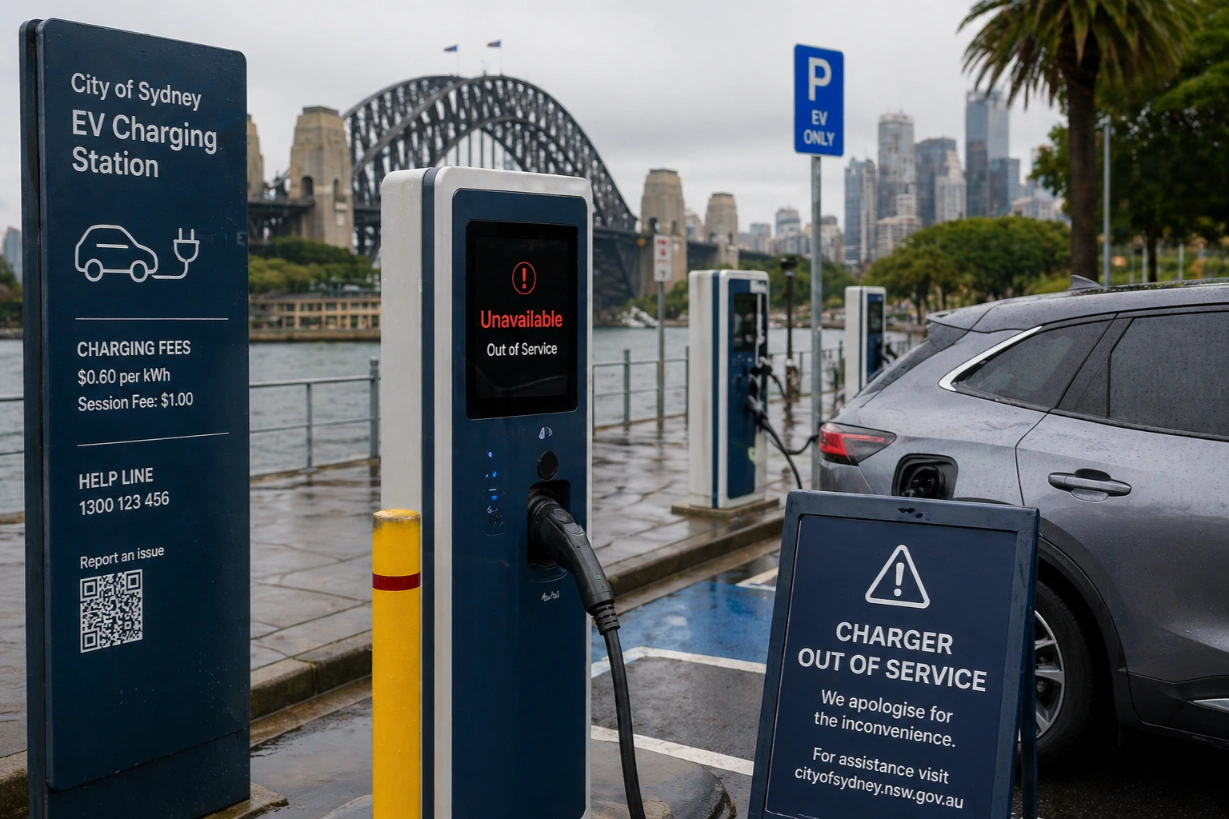
There is nothing more frustrating than arriving at a fast charger in a suburban shopping centre only to find it out of order or occupied by a non-EV (a practice known as “ICE-ing”).
- The Problem: Reliability of public infrastructure remains a top EV issue. Faulty cables, software glitches at the terminal, and payment processing errors are common complaints.
- The Solution: Use apps like PlugShare or the NRMA EV app to check real-time charger status and read recent user comments before you arrive.
The “Garage-less” Owner
For many Sydney residents living in apartments or terrace houses in the Inner West, home charging is simply not an option.
- The Challenge: Relying solely on public fast charging is more expensive and can lead to “charging anxiety” as you plan your week around your car’s energy needs.
- The Solution: Advocate for EV-ready strata laws or look for councils (like the City of Sydney) that are trialling kerbside pole-mounted chargers.
3. Maintenance and Repair: The Hidden Complexities
It is a common myth that electric cars are “maintenance-free.” While they have fewer moving parts than an internal combustion engine (ICE), they introduce new EV maintenance challenges that require specialist attention.
Tyre Wear and Tear
EVs are significantly heavier than petrol cars due to the massive battery packs. They also produce instant torque, which can lead to more aggressive driving habits. On the flip side, regenerative braking reduces wear on traditional brake pads but it also means the braking system behaves differently, and regular brake fluid checks are still essential.
- The Problem: Owners often find they need to replace tyres 20% to 30% sooner than they did with their old petrol cars.
- The Solution: Invest in EV-specific tyres designed with reinforced sidewalls and “high-grip” compounds to handle the extra weight and torque. Regular wheel alignment is also vital to prevent uneven wear.
Specialised Repair Networks
If you are involved in a collision, caravan repairs or standard panel beating won’t cut it. EVs require specialised technicians who understand high-voltage systems.
- The Challenge: In 2026, there is still a shortage of qualified EV technicians in NSW. This can lead to longer wait times for parts and repairs.
- The Solution: Ensure your insurance policy includes a “choice of repairer” clause and verify that your chosen workshop has the certifications to handle your specific EV brand.
4. Software Glitches and the Tech Churn
Modern electric cars are essentially computers on wheels. This brings incredible features like over-the-air (OTA) updates, but it also introduces digital issues with electric cars.
- Software Bugs: Infotainment screens freezing, door handles failing to retract, or phantom braking (where the car abruptly slows down for no reason) are well-documented EV software faults that owners should watch for.
- Rapid Depreciation: Because EV technology moves so fast, older models can lose resale value quickly as newer, more capable batteries and software platforms enter the market. This “tech churn” is one of the notable electric car disadvantages for buyers with an eye on long-term value.
5. Environmental and Safety Risks
While EVs are cleaner at the tailpipe, safety is another area where issues with electric cars are not always talked about openly.
Thermal Runaway
While extremely rare (statistically less likely than petrol car fires), lithium-ion battery fires are incredibly difficult to extinguish. In Sydney, there have been recorded incidents of EV batteries catching fire after being damaged by road debris or during collisions.
- The Safety Note: If you hit a large object on the road or feel a significant impact on the undercarriage, have your battery inspected by a professional immediately.
Pedestrian Safety
Because EVs are nearly silent at low speeds, they pose a risk to pedestrians and cyclists in quiet residential streets. Many 2026 models now include an Acoustic Vehicle Alerting System (AVAS), but as a driver, extra vigilance is required in school zones and shared pathways.
Frequently Asked Questions
