For over a century, the internal combustion engine (ICE) has been the undisputed king of the Australian road. From the legendary Holden Kingswoods of the 70s to the high-tech Toyota Hiluxes dominating Sydney’s worksites today, the roar of a piston engine is a sound synonymous with freedom and reliability.
However, as we move through 2026, the landscape is shifting. With petrol prices fluctuating around $2.20 to $2.50 per litre and a growing emphasis on sustainability, Sydney drivers are facing a complex choice. Should you stick with the familiar petrol engine, opt for the torque of a diesel, or embrace the efficiency of a hybrid?
In this ultimate guide, we will break down how the internal combustion engine works, explore the mechanics of the combustion engine system, and help you decide which powertrain fits your lifestyle in the Harbour City.
1. What Is an Internal Combustion Engine? Breaking Down the ICE
Before comparing your options, it helps to understand what an internal combustion engine actually is. At its simplest, an internal combustion engine is a heat engine where the “combustion” (burning) of fuel occurs inside the engine itself.
Unlike a steam engine (an external combustion engine), where fuel is burned outside to create steam that then moves a piston, an ICE creates a miniature explosion directly above the piston. This explosion generates high-pressure gases that force the piston down, turning a crankshaft and eventually rotating your wheels.
The Combustion Engine System
Every combustion engine system relies on four distinct stages, often called the “four-stroke cycle”:
- Intake: The engine “inhales” air (and sometimes fuel).
- Compression: The piston moves up, squeezing the air-fuel mixture into a tiny space.
- Power: A spark (petrol) or heat (diesel) ignites the mixture, forcing the piston down.
- Exhaust: The “spent” gases are pushed out through the tailpipe.
2. The Engine Combustion Process: Petrol vs Diesel
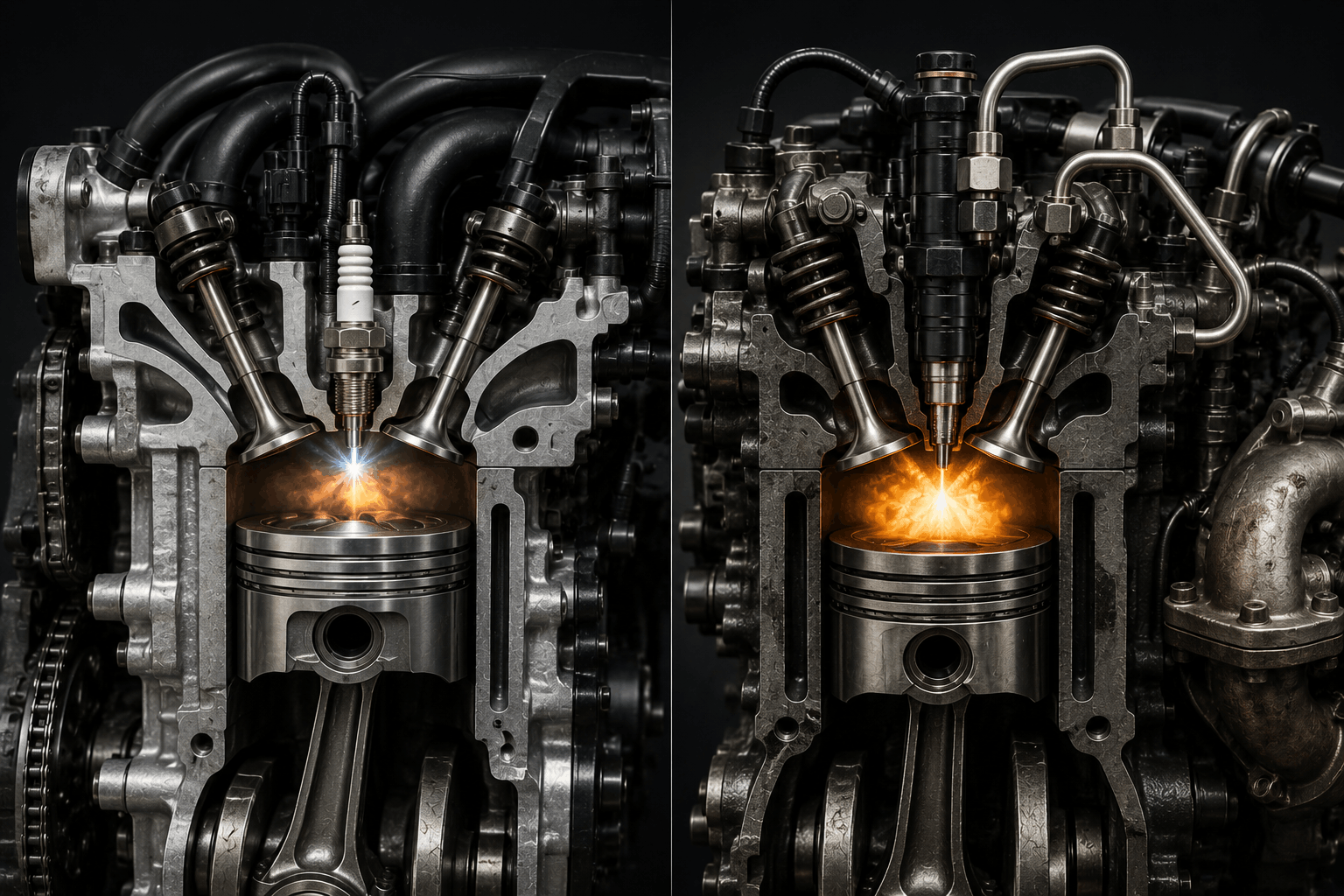
While they share the same four-stroke skeleton, the engine combustion process differs significantly between petrol and diesel units.
Petrol Engines (Spark Ignition)
In a petrol engine, the air and fuel are mixed together before being compressed. Because petrol is highly volatile, it requires a “spark” from a spark plug to ignite.
- The Sydney Experience: Petrol engines are generally quieter and smoother, making them perfect for the stop-start traffic of the M4 or Parramatta Road. They are cheaper to buy upfront but can be “thirsty” if you’re stuck in a crawl.
Diesel Engines (Compression Ignition)
Diesel engines don’t use spark plugs. Instead, they compress air so tightly that it becomes hot enough to ignite the diesel fuel the moment it is injected.
- The Sydney Experience: If you’re towing a boat to the Hawkesbury or a caravan up the coast, diesel is king. It offers immense “low-end torque,” meaning it can pull heavy loads with ease. However, they are louder and require specialised diesel maintenance to keep their particulate filters clean.
3. The Rise of the Hybrid: The Best of Both Worlds?
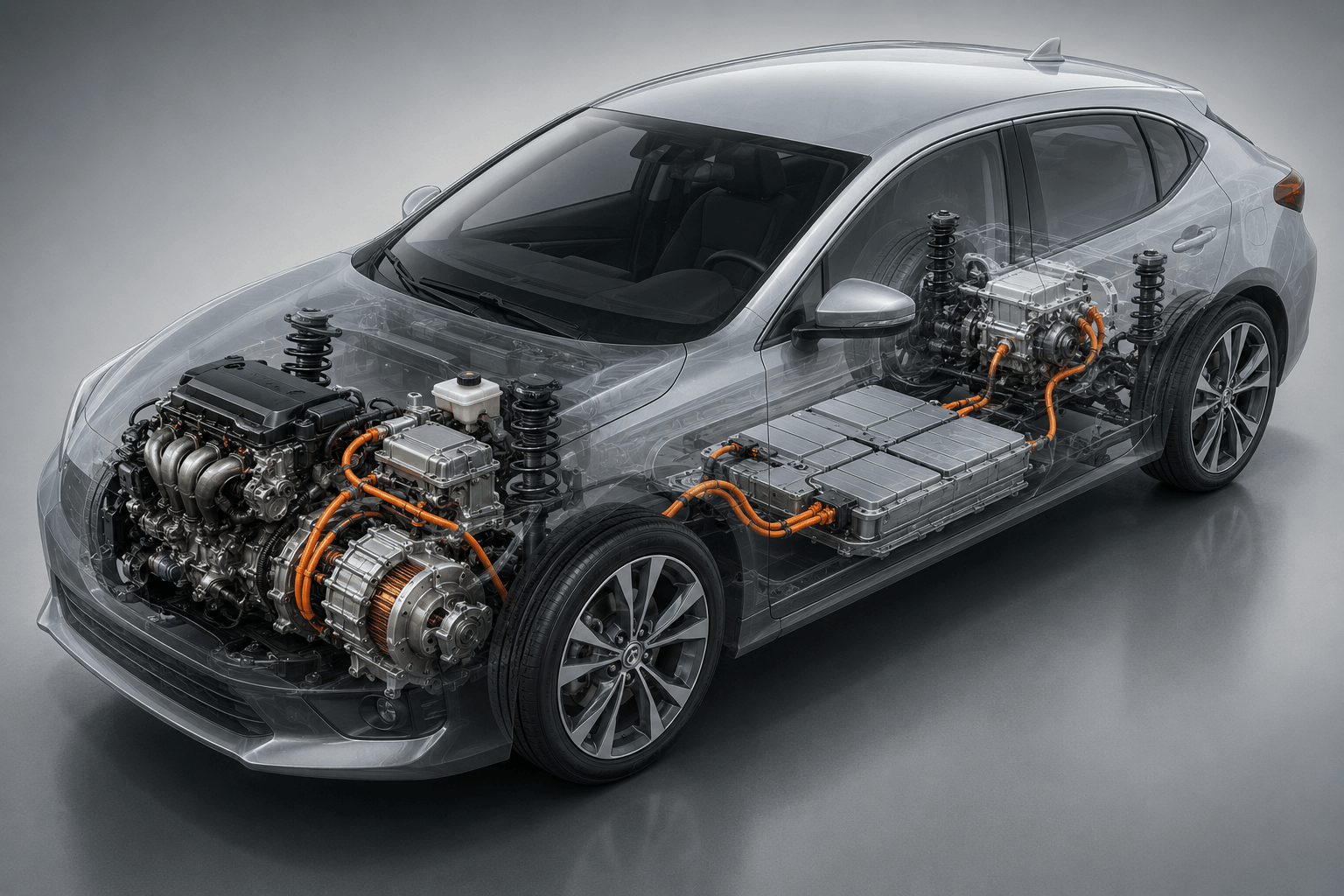
In 2026, the hybrid has become the bridge for many Sydneysiders not yet ready to go fully electric. A hybrid is effectively a vehicle with two hearts: a traditional internal combustion engine and an electric motor.
How it Works
A hybrid uses its electric motor for low-speed “creeping” (perfect for Sydney’s peak hour) and its petrol engine for higher speeds or when the battery is low. The engine combustion process still happens, but it happens less often, saving you a fortune at the bowser.
- Full Hybrids (HEV): These “self-charge” through regenerative braking. You never plug them in.
- Plug-in Hybrids (PHEV): These have a larger battery you can charge at home, offering 50–80km of pure electric driving before the petrol engine kicks in.
4. Comparing the Three: Pros, Cons, and Costs
| Feature | Petrol Engine | Diesel Engine | Hybrid System |
| Upfront Cost | Lowest | Mid-Range | Highest |
| Fuel Economy | 7–10L / 100km | 6–8L / 100km | 3.5–5L / 100km |
| Best For | City Commuting | Long Distance / Towing | Stop-Start Traffic |
| Maintenance | Standard | Specialised | Standard + Battery |
Performance in Sydney
- Petrol: Great for short trips to the shops or school runs in Brookvale.
- Diesel: If you live in the Outer West and commute 50km+ daily on the motorway, diesel’s highway efficiency is hard to beat.
- Hybrid: The absolute winner for the 8 am crawl over the Spit Bridge. It can save you over $1,500 a year in fuel compared to a traditional petrol car.
5. Maintaining Your Internal Combustion Engine
Regardless of the type, every combustion engine requires precision care. Because these systems operate under extreme heat and pressure, small issues can quickly become catastrophic.
The Importance of Filtration
Whether it’s a petrol or diesel unit, the oil and air filters are your first line of defence. Dirty oil leads to internal “scouring,” while a clogged air filter chokes the combustion engine system, leading to sluggish performance and high fuel consumption.
Cooling Systems
Sydney’s 35°C+ summer days are a nightmare for an ICE. The cooling system must work perfectly to prevent the engine from warping. If you notice your temperature gauge rising, it is a sign that your cooling system needs an immediate flush or repair.
Braking and Driveline
Hybrids, in particular, use “regenerative braking,” which can actually reduce wear on your brake pads. However, the extra weight of the hybrid battery means your suspension and steering are under more stress. Regular checks are vital for maintaining that “new car” feel.
6. What’s Next: Alternative Fuels Shaping the Road Ahead
As we look toward 2027 and beyond, the internal combustion engine is evolving rather than disappearing. We are seeing the rise of:
- Synthetic E-Fuels: Carbon-neutral fuels that can run in your existing petrol engine.
- Hydrogen Combustion: Engines that burn hydrogen instead of petrol, emitting only water vapour.
For Sydney drivers, this means the car you buy today will likely remain relevant for years to come, provided it is maintained by experts who understand these evolving technologies.
Frequently Asked Questions
